

Articles and guides
Practical advice, ingredients and stories about solid cosmetics.
In-depth guides
Choose a topic and find practical answers.





Ingredient Atlas
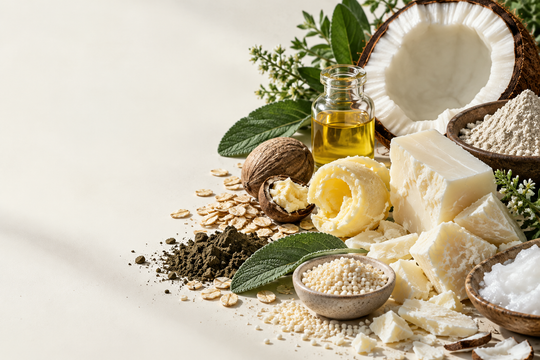
Ingredient origins, textures and practical answers about cosmetic labels.
Read the guide

Solid Cosmetics School
Practical lessons for using, storing and travelling with solid cosmetics.
Read the guide
Which One? Comparison Studio
Clear comparisons for the cosmetics you use, the routines you enjoy and the gifts you give.
Read the guideArticles: 776

Ingredient Atlas
Olefin sulfonate
A liquid concentrate can help make a solid wash. This ingredient’s story links a factory’s supplied material with the temporary washing mixture in your hands.

Ingredient Atlas
Olive oil
An olive holds oil in its fleshy fruit. Follow one harvest from silver-leaved trees to the mill, and the familiar ingredient opens into stories of smooth balms, soap chemistry and...

Ingredient Atlas
Oat kernel flour
The oat groat is the useful grain inside its hull. Follow it from a field harvest into milling, and a familiar breakfast crop becomes a clear lesson in particles, extracts...

Ingredient Atlas
Nettle leaf and root
A nettle patch has a life above and below ground: leaves, roots, fibres and a place in the lives of insects. The cosmetic powder follows one part of that plant,...

Ingredient Atlas
Nyctanthes flower essential oil
A white flower with an orange centre can lead to a surprisingly precise ingredient question. Nyctanthes is often called night jasmine.

Ingredient Atlas
Bayberry · myrica wax
A wax recovered from a fruit-associated covering can bring a softer contribution to a balm. Myrica’s full botanical name keeps that story distinct from Rhus berry wax.

Ingredient Atlas
Microcrystalline wax
A compact balm can hold plenty of flowing ingredients. Microcrystalline wax helps make that arrangement cohesive, while its source and grade tell another part of the story.

Ingredient Atlas
Montmorillonite
A quiet mineral can reorganise a mixture when water arrives. Montmorillonite is one of the clays behind that transformation, with layered structure and exchangeable ions that help explain why one...

Ingredient Atlas
Microalgae extract
A microscopic culture can have a remarkably visible colour. Phormidium persicinum opens a story of red pigments, preserved scientific records and an exact extract name—one that deserves a closer look...

Ingredient Atlas
Mandarin peel essential oil
The loose rind of a mandarin is part of its everyday pleasure. For an essential-oil producer, that peel also offers a choice before processing even begins: the fruit’s stage of...

Ingredient Atlas
Mango butter
The mango’s bright flesh gets our attention; its kernel holds a second material worth discovering. Follow that hidden part through recovery and finishing, and a pale cosmetic butter begins to...

Ingredient Atlas
Lime essential oil
A twist of lime above a glass leaves an unmistakable peel fragrance in the air. Follow the fruit a little closer and three layers come into view: aromatic rind, pale...




