


Articles and guides
Practical advice, ingredients and stories about solid cosmetics.
In-depth guides
Choose a topic and find practical answers.





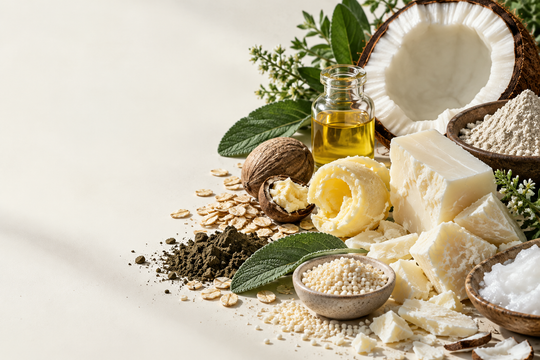
Ingredient Atlas
Ingredient origins, textures and practical answers about cosmetic labels.
Read the guide

Solid Cosmetics School
Practical lessons for using, storing and travelling with solid cosmetics.
Read the guide
Which One? Comparison Studio
Clear comparisons for the cosmetics you use, the routines you enjoy and the gifts you give.
Read the guide

Gift & Gifting Encyclopedia
300 articles about thoughtful gifts: people, occasions, traditions, beautiful presentation and words that feel like you.
Read the guide
Body Cleansing Explained
Does your skin feel tight after the towel? Are you choosing a bar, or wondering where to put it when it’s wet? Start with the part of the shower you’d like to make easier.
Read the guideArticles: 1444

Ingredient Atlas
Sorbitan olivate
Olive oil can lead to an ingredient that looks nothing like the oil in the kitchen. Sorbitan olivate is an olive-fatty-acid derivative, and one established grade arrives as ivory waxy...

Ingredient Atlas
Undecane · the light touch that can leave
Some ingredients help a cosmetic spread, then partly step out of the way. Undecane is useful for understanding that changing moment. In a commercial blend with Tridecane it supplies a...

Ingredient Atlas
Sorbitan oleate
Some ingredients make more sense beside a pigment than beside a flower. Sorbitan oleate helps organise oily mixtures and can wet colour particles so they distribute through a formula. Its...

Ingredient Atlas
Trimethylolpropane triisostearate
The name is an obstacle course; the purpose is easier to enjoy: soft spreading, a fine fatty film and help for colour.

Ingredient Atlas
Sodium cetearyl sulfate
A sulfate in a conditioner? It can be perfectly purposeful. Sodium cetearyl sulfate has a less obvious story than a bottle of bubbles: it can help organise an oil-and-water cream,...

Ingredient Atlas
Triheptanoin
Some ingredients are best understood through what they help other materials do. Triheptanoin can contribute a light, smooth glide while giving pigments and compatible oil-loving ingredients a useful liquid setting....

Ingredient Atlas
Glyceryl stearate SE
Two small letters can change the way an ingredient works. In Glyceryl Stearate SE, they mean self-emulsifying. A glycerin ester is accompanied by a small soap component, creating a prepared...

Ingredient Atlas
Tridecane · the second name in a light emollient pair
Two short names on a label can tell one preparation story. Tridecane often appears beside Undecane because a maker can select them together as a light hydrocarbon blend. Understanding the...

Ingredient Atlas
Polyhydroxystearic acid
The colour in a stick is only as useful as the way its particles are distributed. Polyhydroxystearic acid belongs to that hidden piece of design. Its long name describes a...

Ingredient Atlas
Shea Butter Ethyl Esters · shea with a lighter step
Shea does not always arrive as a scoop of butter. Shea Butter Ethyl Esters are a transformed form that can be much more fluid, giving a maker a lighter sensory...

Ingredient Atlas
Polyglyceryl-4 oleate
An oily cleanser and the water that rinses it away need a way to meet. Polyglyceryl-4 oleate is one of the materials that can help design that encounter. It brings...

Ingredient Atlas
Phytosteryl/octyldodecyl lauroyl glutamate
A long name with an elegant idea inside: borrow from the way lipids organize themselves, then use that understanding to improve a cosmetic.




